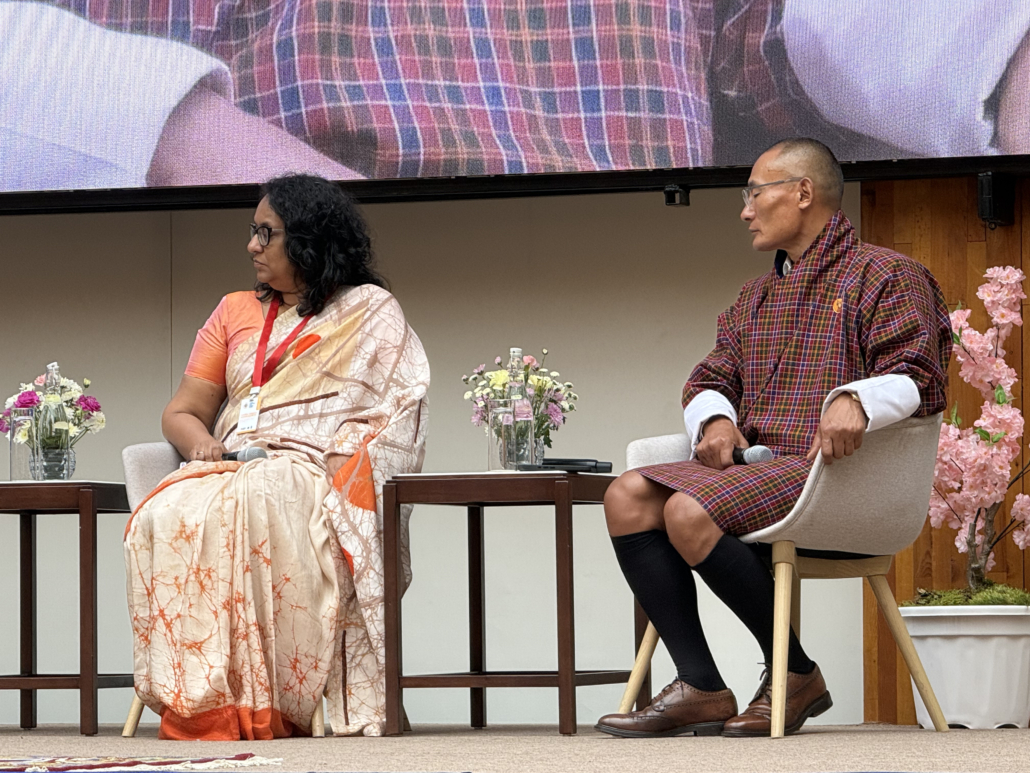
Bhutan Hosts Global Conscious Food Systems Summit 2026
Paro, Bhutan — September 2026
Bhutan hosted the Global Conscious Food Systems Summit from 1 to 4 September 2026, bringing together leaders, policymakers, researchers, farmers, entrepreneurs, civil society representatives and food systems practitioners from around the world.
The Summit created a space to explore food not only through the familiar lenses of nutrition, agriculture, economics and sustainability, but also through values, culture, consciousness, human relationships and wellbeing.
Held in Bhutan, where Gross National Happiness has long encouraged a broader understanding of development, the gathering offered a distinctive setting for conversations about how food systems can support both planetary and human wellbeing.
International Leaders Gather in Bhutan
The Summit brought together senior political and international leaders, including Prime Minister of Bhutan Dasho Tshering Tobgay, Minister for Agriculture and Livestock Younten Phuntsho, Prime Minister of Sri Lanka Dr. Harini Amarasuriya, former President of Ireland and former UN High Commissioner for Human Rights Mary Robinson, and UNDP Deputy Regional Director for Asia and the Pacific and Director of the Bangkok Regional Hub Beate Trankmann.
Their participation reflected the growing recognition that transforming food systems requires more than technical innovation alone. Questions of leadership, values, equity, resilience, culture and human behaviour are increasingly central to discussions about the future of food.
The Summit brought these different perspectives together, connecting global policy with local experience and creating space for dialogue across sectors and cultures.
Beyond Nutrition and Production
A central theme of the gathering was the need to look beyond what food systems produce and consider the wider conditions they create.
Food connects agriculture with health, climate and ecosystems, but it also shapes everyday life, family relationships, cultural identity and community. How food is grown, distributed, prepared and shared reflects choices about what societies value and what kinds of relationships they want to sustain.
This broader perspective is particularly relevant in Bhutan, where food remains closely connected with landscape, culture, community life and spiritual traditions, while the country is simultaneously navigating rapid social, economic and demographic change.
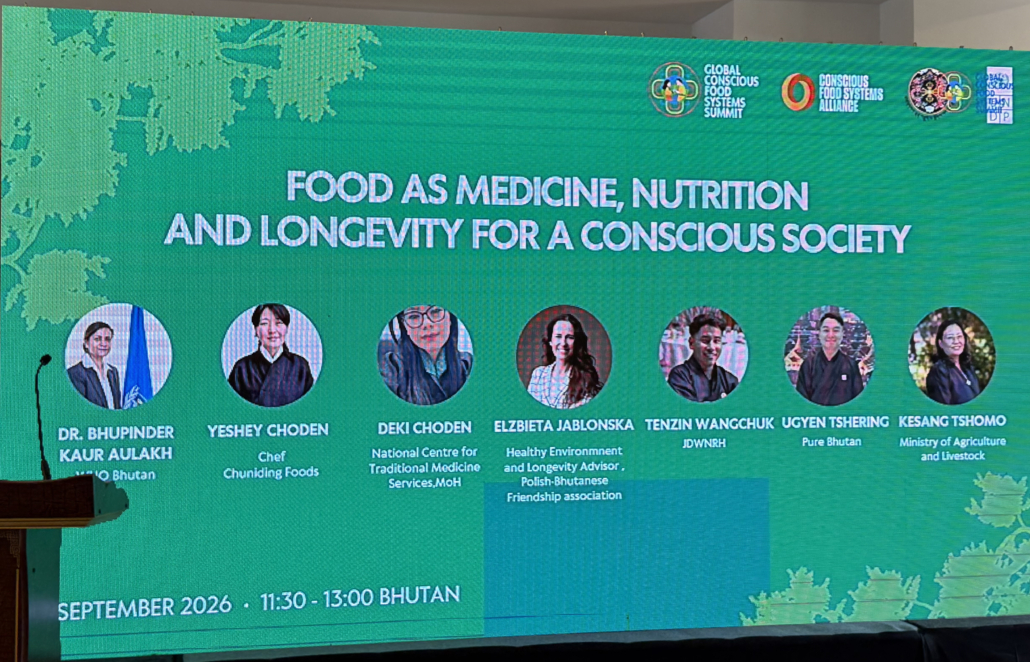
Food Nourishes More Than the Body
President of the Bhutan–Poland Friendship Society Elżbieta Jabłońska contributed to the Summit with a presentation titled “Food Nourishes More Than the Body: Mental Health, Conscious Eating and Healthy Longevity.”
Her presentation explored food through four interconnected dimensions: what food does inside us, what it evokes within us, what eating creates between us, and what kind of environment we build around us.
The presentation highlighted that food influences not only physical health, but also memory, identity, relationships and belonging. Shared meals can connect generations, carry stories and strengthen a sense of continuity across life.
The Dining Table as Social Infrastructure
One of the central ideas of the presentation was that how we eat deserves attention alongside what we eat.
Two meals may be nutritionally similar but create very different human experiences depending on whether they are eaten alone and under stress or shared with conversation, attention and a sense of belonging.
From this perspective, the dining table can be understood as a small piece of social infrastructure — a place where relationships are maintained, generations meet and people experience belonging.
This has important implications for healthy longevity. Living well for longer depends not only on biological health, but also on whether people remain connected, valued and able to contribute throughout life.
From Individual Choices to Food Environments
The presentation also emphasised that healthy eating cannot be reduced to individual discipline alone.
Food environments influence what is available, affordable, visible, convenient and socially normal. Conscious food systems therefore need to consider not only personal choices, but also the conditions in which those choices are made.
A supportive food environment should make healthier choices easier and more natural within everyday life.
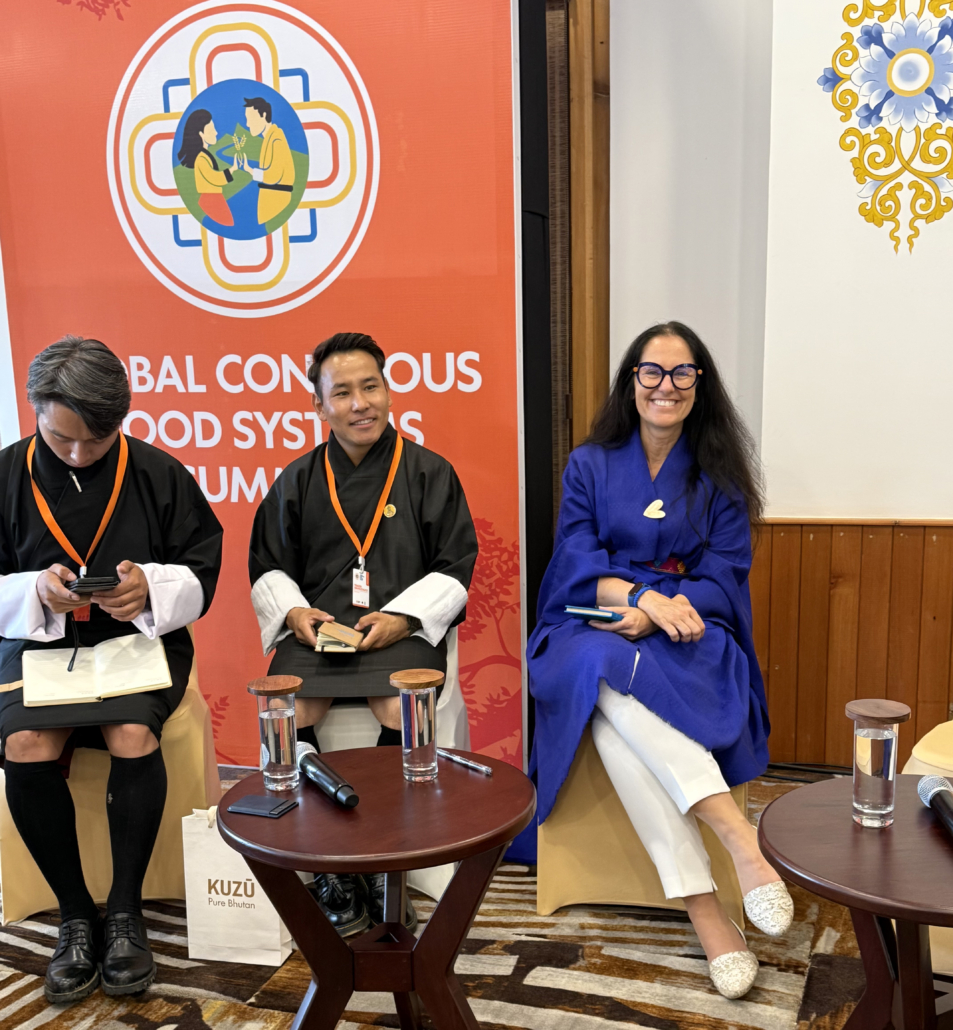
Gelephu Mindfulness City as a Living Prototype
This question becomes particularly interesting in the context of Gelephu Mindfulness City.
Building a new city creates a rare opportunity to consider the conditions for healthy longevity from the beginning, rather than attempting to repair unhealthy systems later.
The questions extend far beyond infrastructure.
Will healthy food be part of ordinary life rather than a premium option? Will people have places and time to eat together? Will children grow up understanding where food comes from? Will older people remain visible and connected to community life?
These questions connect food with the wider design of daily life.
At the scale of the table, food can function as social infrastructure. At the scale of the city, the food environment can become part of the infrastructure for health and longevity.
Gelephu Mindfulness City therefore offers an opportunity to consider food, environment, mental health, social connection and community not as separate systems, but as interconnected elements of a living urban ecosystem.
Broadening the Meaning of Nourishment
The presentation concluded by connecting conscious food systems with Bhutan’s wider philosophy of Gross National Happiness.
Just as Gross National Happiness broadened the way progress is understood, conscious food systems invite a broader understanding of nourishment.
The question is therefore not only whether food systems can provide nutritious, affordable and environmentally sustainable food, but also whether they support mental wellbeing, strengthen social connection and contribute to healthy longevity.
In this sense, food is not simply an input into health. It is part of the social and environmental infrastructure of healthy longevity.
The Global Conscious Food Systems Summit in Bhutan placed these wider questions within an international conversation about the future of food, highlighting the need to bring human values, relationships and wellbeing into food systems transformation alongside science, policy, agriculture and environmental sustainability.

Elżbieta Jabłońska
Bhutan-Poland Friendship Society
 King site
